Many people search for “youth or youths” because they are confused about which word is correct in different situations. Both words are real English words, but they are used differently. Students, writers, bloggers, journalists, and English learners often struggle to know when to use “youth” and when “youths” is the better choice.
The confusion usually happens because “youth” can work as both a singular noun and a collective term. In some sentences, it refers to one young person. In other cases, it describes young people as a group. Meanwhile, “youths” is the plural form used when talking about several individual young people. Because both forms are correct in certain situations, many people are unsure which one sounds more natural or professional.
Understanding the difference is important for grammar, academic writing, business communication, news articles, and everyday English. Using the wrong form can make writing sound awkward or unclear. In this article, you will learn the meanings of youth and youths, grammar rules, real-life examples, British and American English usage, common mistakes, FAQs, and expert advice on choosing the correct word confidently.
Youth or Youths – Quick Answer
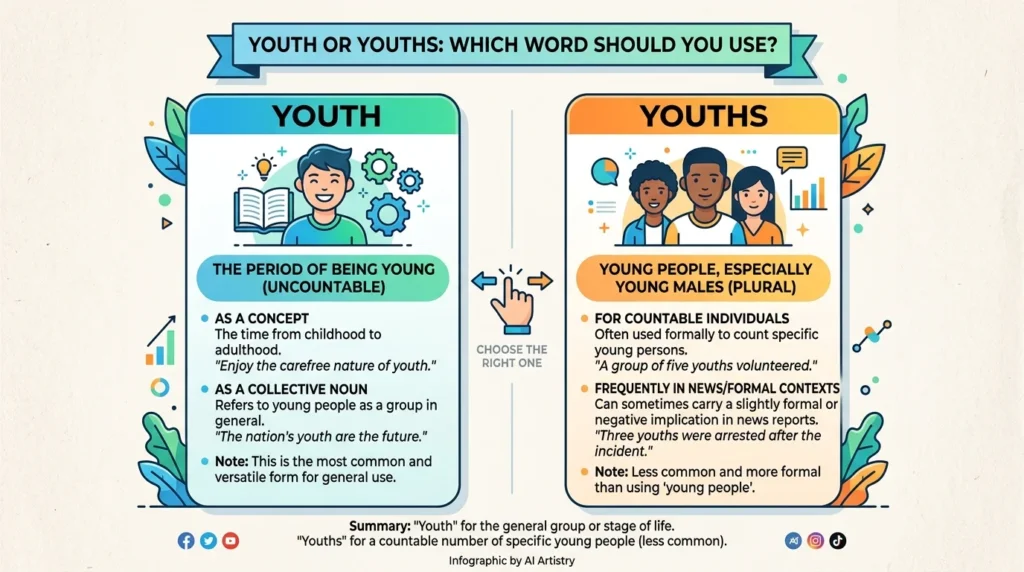
Both “youth” and “youths” are correct, but they are used differently.
Use “Youth”
Use “youth” when talking about:
- Young people as a group
- The period of being young
- One young person
Examples
- Today’s youth love technology.
- He spent his youth in London.
- The youth helped the teacher.
Use “Youths”
Use “youths” when talking about several individual young people.
Examples
- Three youths were playing football.
- Police spoke to the youths near the park.
Quick Comparison
| Word | Meaning | Example |
| Youth | Young people collectively or one young person | Today’s youth use smartphones |
| Youths | Multiple young individuals | Two youths entered the shop |
The Origin of Youth or Youths
Origin of “Youth”
The word “youth” comes from Old English. It originally described the condition of being young. Over time, it also became a word for young people.
Development of “Youths”
“Youths” later developed as the plural form when referring to multiple individual young people.
Why the Confusion Exists
The confusion exists because:
- “Youth” can already describe many young people collectively
- Some writers rarely use “youths”
- Different regions prefer different styles
British English vs American English Spelling
Both British and American English use the same spellings:
- Youth ✅
- Youths ✅
However, usage style may differ slightly.
British English Usage
British English often uses “youths” more frequently in news reports.
Example:
- Police questioned several youths.
American English Usage
American English often prefers collective phrases like:
- Young people
- Teenagers
- Youth
Comparison Table
| Word | British English | American English | Correct? |
| Youth | Common | Common | ✅ |
| Youths | More common in reports | Less common but correct | ✅ |
Which Spelling Should You Use?
The correct choice depends on your sentence meaning.
Use “Youth” When:
- Talking about young people generally
- Referring to teenage culture
- Describing young age
Examples
- Youth sports are becoming popular.
- The youth of today are creative.
Use “Youths” When:
- Referring to several separate young individuals
- Writing news-style reports
- Describing a specific group
Examples
- Four youths were seen near the station.
- The youths joined the competition.
Audience-Based Advice
| Audience | Recommended Usage |
| Academic writing | Youth |
| News reports | Youths |
| Casual conversation | Youth |
| Global audience | Youth |
| Formal reports | Depends on context |
Common Mistakes with Youth or Youths
Many writers misuse these words.
Mistake 1: Using “Youths” for General Groups
❌ Today’s youths love music.
✅ Today’s youth love music.
Mistake 2: Using “Youth” for Several Individuals
❌ Three youth entered the store.
✅ Three youths entered the store.
Mistake 3: Confusing Age and People
“Youth” can mean both young age and young people.
Example:
- His youth was difficult.
Youth or Youths in Everyday Examples
In Emails
- Youth programs start next Monday.
In News Articles
- Two youths helped rescue a child.
In Social Media
- Today’s youth enjoy digital learning.
In School Writing
- Youth participation is increasing in sports.
In Formal Writing
- The organization supports disadvantaged youths.
Youth or Youths – Google Trends & Usage Data
Search engines show that many users search this keyword because both forms are correct in different situations.
Popular Search Countries
- United States
- United Kingdom
- Canada
- Australia
- India
Common Search Questions
Users often search:
- Youth or youths grammar
- Is youths correct?
- Difference between youth and youths
- When to use youths
Usage Context
| Word | Common Usage |
| Youth | General collective term |
| Youths | Multiple individuals |
| Youth culture | Social discussions |
| Youth programs | Education and sports |
Comparison Table: Youth vs Youths
| Feature | Youth | Youths |
| Singular meaning | Yes | No |
| Collective meaning | Yes | No |
| Plural individuals | Rare | Yes |
| Common in news reports | Sometimes | Very common |
| Used globally | Yes | Yes |
| Formal writing | Common | Context-based |
Why People Confuse Youth and Youths
Several reasons create confusion.
Dual Meaning of “Youth”
“Youth” can mean:
- One young person
- Young people generally
- The period of young age
Regional Writing Style
Different countries prefer different wording styles.
Similar Meaning
Both words relate to young people, making them easy to mix up.
Professional Advice for Writers and Students
Using the correct form improves clarity and professionalism.
Best Writing Tips
- Use “youth” for general groups.
- Use “youths” for separate individuals.
- Read the sentence aloud to test meaning.
- Keep grammar consistent.
Easy Memory Trick
Think:
- “Youth” = group or age
- “Youths” = many individual people
FAQs About Youth or Youths
Is “youths” a real word?
Yes. “Youths” is the correct plural form of “youth.”
Which is more common?
“Youth” is more common in everyday English.
When should I use “youths”?
Use it when talking about several individual young people.
Is “youth” singular or plural?
It can work as singular or collective depending on context.
Is youths used in American English?
Yes, but less often than in British English.
Can youth mean teenagers?
Yes. It often refers to teenagers or young adults.
Which sounds more professional?
Both are professional when used correctly.
Conclusion
The difference between youth or youths becomes simple once you understand the context. “Youth” is commonly used as a collective term for young people or to describe the period of being young. “Youths” is the plural form used when talking about several individual young people. Both words are correct, but choosing the right one depends on your sentence meaning and writing style.
In most everyday writing, “youth” is more common and sounds more natural. News reports and formal descriptions may use “youths” when discussing specific individuals. Understanding this grammar difference helps improve communication, writing clarity, and professionalism. Whether you are a student, writer, teacher, blogger, or business professional, using youth and youths correctly will strengthen your English skills and make your writing easier to understand. Simple grammar choices can make a big difference in clear and effective communication.