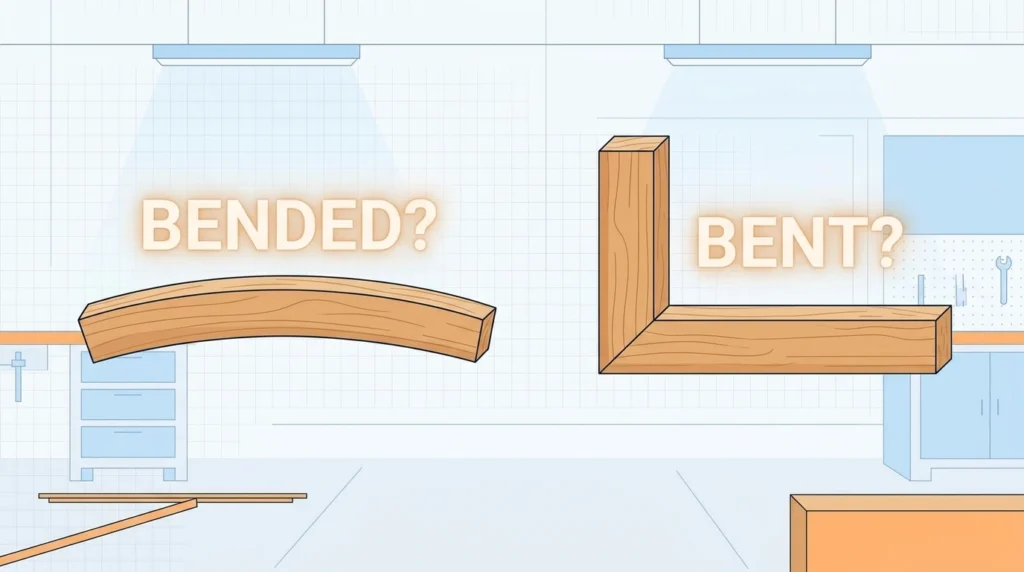
Many English learners get confused between the words “bended” and “bent.” This confusion is very common because both forms appear in old texts, songs, poetry, and even in everyday speech. People often search “bended or bent” to understand which one is correct in modern English and which one should be avoided in writing.
The main problem is that English has evolved over time. Some older verb forms like “bended” still exist in special phrases, while “bent” is now the standard past tense and past participle of the verb “bend.” Because of this mix of old and modern usage, learners often feel unsure about which word to use in exams, emails, or professional writing.
For example, you may see:
- “He bent the rod” (correct modern usage)
- “He bended his knee” (old or poetic usage)
This article will clearly explain the difference between bended and bent, their history, correct usage, common mistakes, and real-life examples. By the end, you will know exactly which form to use in modern English without confusion. This guide is especially useful for students, writers, and English learners who want clear and simple grammar rules.
“Bended or Bent” – Quick Answer
The correct modern English form is:
👉 Bent = correct (standard past tense and past participle)
👉 Bended = old, rare, or poetic (not standard grammar)
Examples:
- She bent the wire. ✔
- He bent down to pick it up. ✔
- He bended his knee in prayer. (old/poetic)
👉 Simple rule:
Use “bent” in almost all situations.
The Origin of “Bended or Bent”
The verb “bend” comes from Old English “bendan,” meaning to curve or make something straight into a shape.
In earlier English:
- “bended” was commonly used as past tense
- Over time, English simplified verb forms
- “bent” became the standard form
Why did this change happen?
Because English naturally removes extra verb forms to become easier and faster to use.
Today:
- “bent” = modern standard English
- “bended” = historical or poetic usage only
British English vs American English Spelling
There is no major difference between British and American English for this word. Both use “bent” as the correct form.
However, usage style differs slightly:
| Usage Type | British English | American English |
| Standard past tense | bent | bent |
| Formal writing | bent | bent |
| Poetic expression | “bended knee” (common phrase) | “bended knee” (rare) |
| Grammar preference | strict modern usage | strict modern usage |
👉 Conclusion: Both use “bent” as standard.
Which Spelling Should You Use?
Use depends on context:
- ✅ Use “bent” in:
- Exams
- Business writing
- Emails
- Articles
- Daily English
- ⚠️ Use “bended” only in:
- Poetry
- Religious phrases (“on bended knee”)
- Old-style writing
👉 Global rule:
“Bent” is always safe and correct.
Common Mistakes with “Bended or Bent”
❌ Wrong: He bended the paper
✔ Correct: He bent the paper
❌ Wrong: She bended down
✔ Correct: She bent down
❌ Wrong: The rod is bended
✔ Correct: The rod is bent
👉 Key mistake:
People think “bended” is the normal past tense — but it is not.
“Bended or Bent” in Everyday Examples
📧 Emails:
- I bent the document while organizing files.
- Please check the bent folder inside the package.
📰 News:
- The metal structure bent during the storm.
- The bridge bent under heavy pressure.
📱 Social Media:
- He bent the rules 😅
- This phone case is slightly bent 📱
📄 Formal Writing:
- The material bent under force testing.
- The rod was bent during the experiment.
“Bended or Bent” – Google Trends & Usage Data
Search behavior shows:
- High confusion among English learners
- Popular searches in South Asia and Middle East
- Common in grammar correction queries
Why people search it:
- They see “bended knee” in songs or poetry
- They assume “bended” is correct grammar
- They want clarification for exams and writing
👉 Conclusion from data:
“Bent” dominates modern usage globally.
Comparison Table: Bended vs Bent
| Word | Status | Meaning | Usage | Example |
| Bent | Correct modern form | Past of bend | Standard English | He bent the metal |
| Bended | Old/poetic form | Same meaning | Rare usage | On bended knee |
FAQs
1. Is “bended” correct English?
It is not standard. It is only used in poetry or old expressions.
2. What is the correct past tense of bend?
The correct form is bent.
3. Can I use “bended” in exams?
No, you should always use bent.
4. Why do people say “bended knee”?
It is a traditional phrase used in poetry and religious contexts.
5. Is there any difference between British and American English here?
No, both use “bent” as standard grammar.
6. Is “bended” completely wrong?
Not wrong, but outdated and rarely used.
7. Which one should I learn as a beginner?
Always learn and use “bent.”
Conclusion
The confusion between “bended or bent” is very common among English learners, but the rule is actually simple. In modern English, the correct and standard form is “bent.” It is used as both the past tense and past participle of the verb “bend.” This makes it the safest and most widely accepted choice for writing, speaking, exams, and professional communication.
On the other hand, “bended” is an old or poetic form that is rarely used today. You may still see it in expressions like “on bended knee,” but it is not considered correct in standard grammar. This is why learners often get confused when they see it in songs, poems, or older texts.
Both British and American English follow the same rule, so there is no regional difference in this case. If you remember one simple rule — always use “bent” — you will never make a mistake. This will improve your grammar accuracy and make your English sound natural and professional in all situations.