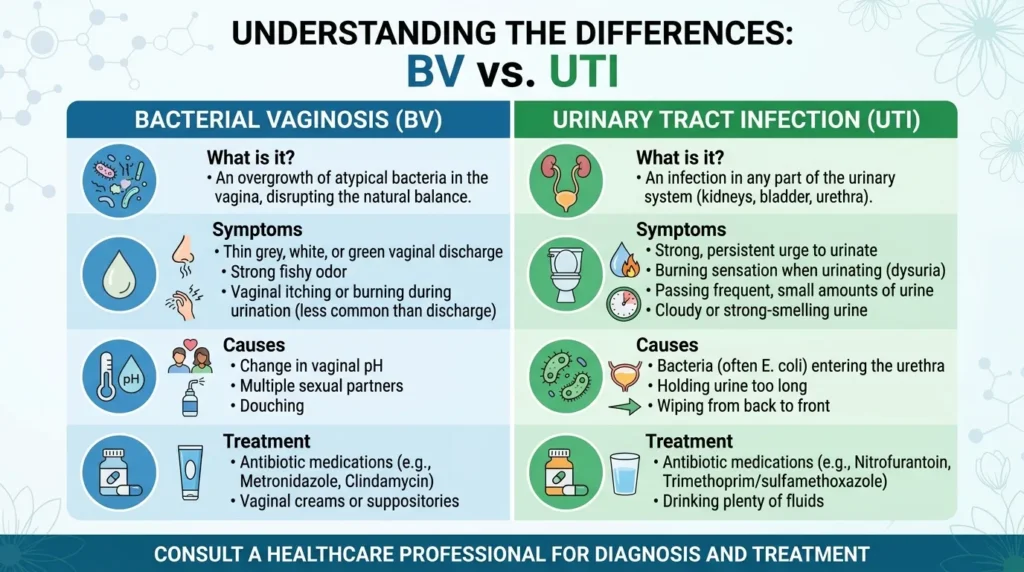
Many women experience burning, discomfort, unusual discharge, or irritation and immediately wonder: Is it BV or UTI? This is one of the most common health-related searches online because the symptoms of Bacterial Vaginosis (BV) and Urinary Tract Infections (UTIs) can sometimes feel similar.
The confusion happens because both conditions affect the urinary or vaginal area and can cause discomfort during daily activities. However, BV and UTI are very different conditions with different causes, symptoms, treatments, and prevention methods.
Knowing the difference is important because the wrong treatment may not solve the problem. A person who assumes they have a UTI may actually have BV, while someone treating BV symptoms could be dealing with a urinary infection.
This guide explains the differences between BV and UTI in simple language. You will learn how to identify symptoms, understand causes, compare treatments, avoid common mistakes, and know when to seek medical advice.
BV or UTI – Quick Answer
What Is the Difference?
BV (Bacterial Vaginosis) is a vaginal condition caused by an imbalance of bacteria in the vagina.
UTI (Urinary Tract Infection) is an infection that affects the urinary system, including the bladder, urethra, or kidneys.
Simple Examples
BV Example:
- Thin gray or white discharge
- Fishy odor
- Mild irritation
UTI Example:
- Burning when urinating
- Frequent urge to urinate
- Pelvic discomfort
Although symptoms can overlap, BV affects the vagina while a UTI affects the urinary tract.
The Origin of BV and UTI
What Does BV Mean?
BV stands for Bacterial Vaginosis.
The term comes from:
- Bacterial = related to bacteria
- Vaginosis = an imbalance in the vaginal environment
BV is not always considered a traditional infection. It often develops when healthy vaginal bacteria become unbalanced.
What Does UTI Mean?
UTI stands for Urinary Tract Infection.
The term refers to infections affecting:
- Urethra
- Bladder
- Ureters
- Kidneys
Most UTIs occur when bacteria enter the urinary tract and multiply.
BV vs UTI: Key Differences
Comparison Table
| Feature | BV | UTI |
|---|---|---|
| Full Name | Bacterial Vaginosis | Urinary Tract Infection |
| Affected Area | Vagina | Urinary Tract |
| Main Cause | Bacterial imbalance | Bacterial infection |
| Common Odor | Fishy smell | Usually none |
| Vaginal Discharge | Common | Rare |
| Burning During Urination | Sometimes | Very common |
| Frequent Urination | Rare | Very common |
| Pelvic Pain | Sometimes | Common |
| Treatment | Specific antibiotics | Different antibiotics |
| Contagious | Not usually | Not usually |
Which Condition Might You Have?
Signs That Suggest BV
You may have BV if you notice:
- Thin white or gray discharge
- Fishy vaginal odor
- Mild itching
- Symptoms after intercourse
Signs That Suggest UTI
You may have a UTI if you notice:
- Pain or burning when urinating
- Frequent urination
- Urgent need to urinate
- Cloudy urine
- Lower abdominal discomfort
When Symptoms Overlap
Some people experience:
- Burning sensations
- Irritation
- Pelvic discomfort
In these cases, a healthcare professional may perform tests to determine whether it is BV, UTI, or another condition.
Common Mistakes with BV or UTI
Mistake 1: Assuming Burning Always Means a UTI
Many people think burning automatically means a urinary infection.
However, BV can also cause irritation and discomfort.
Mistake 2: Ignoring Vaginal Discharge
Unusual discharge is more commonly associated with BV than UTI.
Ignoring this symptom may delay proper treatment.
Mistake 3: Self-Diagnosing Online
Online information can be helpful, but symptoms often overlap.
A medical evaluation provides a more accurate diagnosis.
Mistake 4: Using Old Antibiotics
Taking leftover medication without professional advice may not treat the actual condition.
Mistake 5: Delaying Treatment
Untreated infections or imbalances may worsen over time and lead to complications.
BV or UTI in Everyday Situations
In Healthcare Conversations
Example:
I thought I had a UTI, but my doctor diagnosed BV.
In Online Forums
Example:
My symptoms feel like BV or UTI. How can I tell the difference?
In Social Media Discussions
Example:
Many women confuse BV symptoms with a urinary tract infection.
In Medical Reports
Example:
Laboratory testing confirmed bacterial vaginosis rather than a urinary tract infection.
BV or UTI – Popular Search Trends and Usage
The keyword “BV or UTI” is commonly searched because people want quick answers about symptoms.
Common Search Questions
- BV or UTI symptoms?
- Can BV feel like a UTI?
- BV vs UTI discharge?
- BV vs UTI smell?
- How do doctors tell the difference?
Countries with High Interest
Search interest is common in:
- United States
- Canada
- United Kingdom
- Australia
- New Zealand
Why People Search This Topic
People often experience symptoms before receiving a diagnosis. They search online to understand possible causes and decide whether they should seek medical care.
BV vs UTI Treatment Comparison
| Factor | BV | UTI |
|---|---|---|
| Typical Treatment | Antibiotics for BV | Antibiotics for UTI |
| Hydration Helpful? | Somewhat | Very helpful |
| Recurrence Possible? | Yes | Yes |
| Medical Diagnosis Recommended? | Yes | Yes |
| Home Remedies Alone Sufficient? | Usually no | Usually no |
| Professional Testing Useful? | Yes | Yes |
Risk Factors for BV
Common risk factors include:
- Changes in vaginal bacteria
- Multiple sexual partners
- Douching
- Previous BV episodes
- Smoking
Risk Factors for UTI
Common risk factors include:
- Sexual activity
- Dehydration
- Holding urine too long
- Urinary tract abnormalities
- Previous UTIs
Prevention Tips
Preventing BV
- Avoid douching
- Practice good hygiene
- Follow healthcare recommendations
- Avoid unnecessary vaginal products
Preventing UTIs
- Drink plenty of water
- Urinate when needed
- Maintain proper hygiene
- Urinate after sexual activity if advised by a healthcare professional
Frequently Asked Questions (FAQs)
Can BV feel like a UTI?
Yes. Both conditions can cause irritation and discomfort, which sometimes leads to confusion.
Does BV cause burning when urinating?
It can. However, burning during urination is more commonly associated with UTIs.
Can I have BV and a UTI at the same time?
Yes. Some people experience both conditions simultaneously.
Which condition causes a fishy smell?
A fishy odor is more commonly linked to BV.
Which condition causes frequent urination?
Frequent urination is a common symptom of a UTI.
Do BV and UTI require different treatments?
Yes. Although both may involve antibiotics, the medications and treatment plans are often different.
When should I see a healthcare professional?
Seek medical advice if symptoms are severe, persistent, recurring, or causing significant discomfort.
Conclusion
Understanding the difference between BV or UTI is important because these conditions affect different parts of the body and require different treatments. BV is caused by an imbalance of vaginal bacteria, while a UTI is an infection of the urinary tract. Although symptoms can sometimes overlap, certain signs such as fishy odor and unusual discharge point more toward BV, while frequent urination and strong burning sensations are more commonly linked to UTIs.
The safest approach is not to rely solely on self-diagnosis. If symptoms continue or become worse, professional medical evaluation can help identify the exact cause and ensure proper treatment. By recognizing key symptoms, understanding risk factors, and following prevention strategies, individuals can make informed decisions about their health and seek appropriate care when needed.