Practice vs practise is one of the most common spelling questions in English. The two words look almost the same and have the same basic connection to training, repeated activity, or professional work. The main difference is where the word is used and which form of English you are writing.
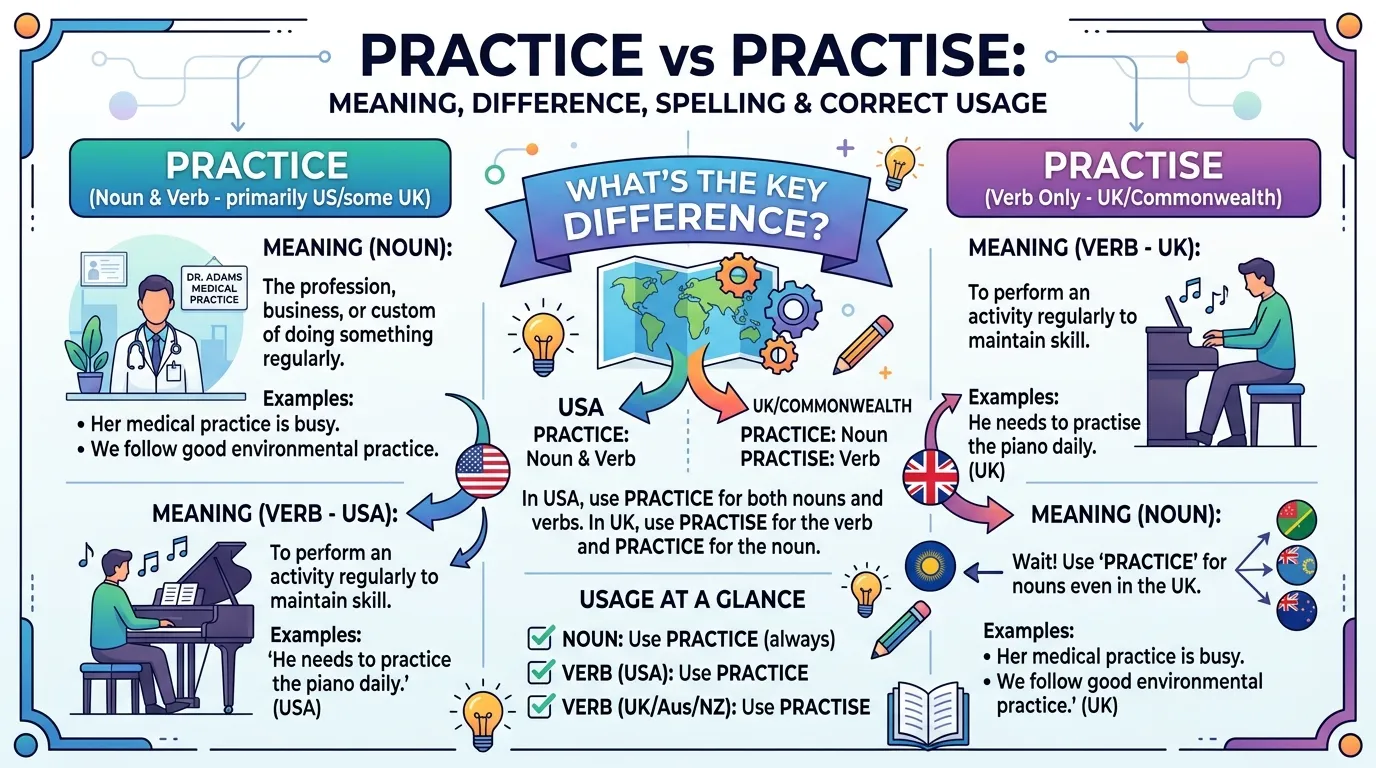
In American English, practice is used as both a noun and a verb. For example, “I need more practice” uses it as a noun, while “I practice every day” uses it as a verb.
In British English, practice is normally the noun, while practise is the verb. For example, “She needs more practice” but “She practises every day.”
This spelling difference often causes confusion for students, bloggers, professionals, and people writing for international audiences. It is especially important in emails, academic work, websites, and business documents.
This guide explains practice vs practise in simple English. You will learn the difference between American and British English, common mistakes, pronunciation, everyday examples, useful memory tricks, and which spelling you should use for your audience.
Practice vs Practise – Quick Answer
The quickest rule is:
- Practice = noun in British English; noun and verb in American English.
- Practise = verb in British English.
American English
American English uses practice for both the noun and verb.
I need more practice.
I practice English every day.
She practices the piano.
British English
British English normally uses:
- Practice = noun
- Practise = verb
Examples:
I need more practice.
I practise English every day.
She practises the piano.
Easy Memory Trick
For British English:
Practice = a thing
Practise = an action
Think:
You need practice before you can practise well.
The Origin of Practice vs Practise
Both practice and practise come from the same historical root.
They are related to the Latin word practicus, meaning practical or connected with action. The words entered English through French and developed meanings connected with doing, training, and professional work.
Origin of Practice
Practice became the noun form referring to:
- Repeated training
- A usual method
- Professional work
- An established activity
Examples:
regular practice
common practice
medical practice
Origin of Practise
Practise developed as a verb meaning:
- To perform repeatedly
- To train
- To use a skill
- To carry out a profession
Examples:
practise speaking
practise a skill
practise medicine
Why Are There Two Spellings?
The spelling difference developed mainly between British English and American English.
British English retained a distinction between the noun practice and the verb practise.
American English generally simplified the system and uses practice for both forms.
This is why you may see:
British: practice / practise
American: practice / practice
British English vs American English Spelling
This is where the main difference appears.
British English
In standard British English:
Practice is usually a noun.
Your practice is improving.
Practise is usually a verb.
You should practise every day.
American English
American English uses practice for both nouns and verbs.
Your practice is improving.
You should practice every day.
Comparison Table
| Use | British English | American English |
|---|---|---|
| Noun | practice | practice |
| Verb | practise | practice |
| Training | practice | practice |
| Repeated action | practise | practice |
| Professional activity | practice | practice |
British English Examples
She needs more practice.
She practises the piano every evening.
He practises law in London.
American English Examples
She needs more practice.
She practices the piano every evening.
He practices law in New York.
Which Spelling Should You Use?
The correct spelling depends on your target audience.
Use Practice in American English
If you are writing for the United States, use practice as both a noun and a verb.
I practice English every morning.
He practices medicine.
More practice will improve your skills.
Use Practice and Practise in British English
If you are writing for the UK, use:
Practice as a noun:
She needs more practice.
Practise as a verb:
She needs to practise more.
This pattern is also common in other forms of English that follow British spelling conventions.
For Commonwealth English
Many Commonwealth varieties, including Australian and New Zealand English, generally follow the British distinction:
practice = noun
practise = verb
For Global English
If your website targets an international audience, choose one spelling system and use it consistently.
If you target American readers:
practice
If you target British or many Commonwealth readers:
practice for nouns and practise for verbs.
Consistency is more important than mixing both systems.
Common Mistakes with Practice vs Practise
Mistake 1: Using “Practise” in American English
For American English, this is generally incorrect:
I practise English every day.
Use:
I practice English every day.
Mistake 2: Using “Practice” as a Verb in British English
In standard British English:
I practice English every day.
is usually not the preferred spelling.
Better:
I practise English every day.
Mistake 3: “More Practise”
When using British English, practise is a verb, so this is incorrect:
I need more practise.
Correct:
I need more practice.
Mistake 4: Confusing the Verb and Noun
British English:
I need more practice, so I will practise every day.
The first word is a noun. The second is a verb.
Mistake 5: Mixing English Styles
Avoid switching between styles in the same article.
For example, if you use British English:
She practises every day.
Do not later write:
He practices every day.
Keep your spelling consistent.
Practice vs Practise in Everyday Examples
In Emails
British English:
Please practise the presentation before tomorrow’s meeting.
American English:
Please practice the presentation before tomorrow’s meeting.
In Education
British English:
Students should practise their reading skills.
American English:
Students should practice their reading skills.
In Business
British English:
This is a common business practice.
Employees should practise good communication skills.
American English:
This is a common business practice.
Employees should practice good communication skills.
In News
British English:
Doctors are expected to practise according to professional standards.
American English:
Doctors are expected to practice according to professional standards.
On Social Media
British English:
Keep practising until you get it right!
American English:
Keep practicing until you get it right!
In Formal Writing
British English:
Regular practice can improve performance, while students should practise the skill consistently.
American English:
Regular practice can improve performance, while students should practice the skill consistently.
Practice vs Practise – Comparison Table
| Word | English Variety | Function | Example |
|---|---|---|---|
| Practice | British | Noun | I need more practice. |
| Practise | British | Verb | I practise every day. |
| Practice | American | Noun | I need more practice. |
| Practice | American | Verb | I practice every day. |
| Practices | American | Verb | She practices daily. |
| Practises | British | Verb | She practises daily. |
| Practicing | American | Verb | He is practicing now. |
| Practising | British | Verb | He is practising now. |
| Practiced | American | Verb/adjective | She practiced yesterday. |
| Practised | British | Verb/adjective | She practised yesterday. |
Practice vs Practise Pronunciation
An important point is that practice and practise are pronounced the same way when they have the same grammatical role.
Both are commonly pronounced approximately:
PRAK-tis
For example:
practice
practise
The difference is mainly in spelling and grammar, not pronunciation.
Pronunciation Table
| Word | Approximate Sound | Main Difference |
|---|---|---|
| Practice | PRAK-tis | Spelling |
| Practise | PRAK-tis | Spelling |
This makes the words especially easy to confuse in spoken English.
How to Remember Practice vs Practise
British English Trick
Remember:
Practice = noun
Practise = verb
A useful sentence is:
Practice makes perfect, so practise every day.
The first is a noun.
The second is a verb.
American English Trick
In American English, simply use:
Practice
for both noun and verb.
The “C” and “S” Trick
For British English, you can remember:
C = practice as a noun
S = practise as a verb
This is similar to another British English distinction:
advice = noun
advise = verb
Practice vs Practise – Google Trends & Usage Data
Search interest for practice vs practise is strongly connected with English spelling, grammar, education, writing, and differences between British and American English.
Practice is widely searched and used because it is the standard spelling in American English and is also the noun form in British English.
Practise is mainly associated with British English and other English varieties that maintain the noun/verb spelling distinction.
Searches for the pair often come from:
- English learners
- Students
- Bloggers
- Teachers
- Writers
- International businesses
- People preparing professional documents
Google Trends interest can vary by country and over time. Exact search-volume figures should be checked directly before publishing specific statistics.
The main search intent is usually to find out whether the verb should be spelled practice or practise.
FAQs About Practice vs Practise
1. What is the difference between practice and practise?
In British English, practice is usually a noun and practise is a verb.
In American English, practice is used for both.
2. Is it “practice” or “practise” in American English?
Use practice for both noun and verb.
I practice English every day.
3. Is it “practice” or “practise” in British English?
Use practice as a noun and practise as a verb.
I need more practice.
I practise every day.
4. Is “medical practice” correct?
Yes.
Medical practice is correct because practice is a noun.
This is true in both British and American English.
5. Is “practise medicine” correct?
In British English, yes:
Doctors practise medicine.
In American English:
Doctors practice medicine.
6. Are practice and practise pronounced differently?
No. They are normally pronounced the same.
The difference is mainly spelling and grammatical use.
7. Which spelling is better for SEO?
Neither spelling is automatically better. Use the spelling that matches your target audience.
For American readers, use practice.
For British readers, use practice as the noun and practise as the verb.
Conclusion
The difference between practice vs practise mainly depends on English variety and grammatical function. In American English, practice is used for both the noun and the verb. In British English, practice is generally the noun, while practise is the verb.
For example, an American writer may say, “I need more practice, so I practice every day.” A British writer would normally write, “I need more practice, so I practise every day.”
A simple British English memory trick is C for the noun and S for the verb: practice is the thing, while practise is the action. Another useful sentence is: “Practice makes perfect, so practise every day.”
The two words are pronounced the same, so the difference is mainly visible in writing. There is also no difference in their basic meaning between British and American English; the main difference is the spelling of the verb.
For websites, blogs, emails, academic papers, and business documents, always consider your target audience. If you write for Americans, use practice throughout. If you write for British or many Commonwealth audiences, use practice for nouns and practise for verbs.
Most importantly, stay consistent. Choosing one English style and using it throughout your content will make your writing clear, professional, and easier for readers to trust.