Many people get confused between “crises” and “crisis.” The two words look almost the same, but they do not mean exactly the same thing. This small spelling difference changes whether you are talking about one problem or many problems.
People search for “crises or crisis” because they want to use the correct word in emails, essays, news writing, business reports, and daily conversations. Students often wonder which version is singular and which is plural. Writers also worry about grammar mistakes when using these words in professional content.
The confusion becomes even more common because English contains many irregular plural words. Unlike simple words that add “-s” or “-es,” the word “crisis” changes differently when it becomes plural.
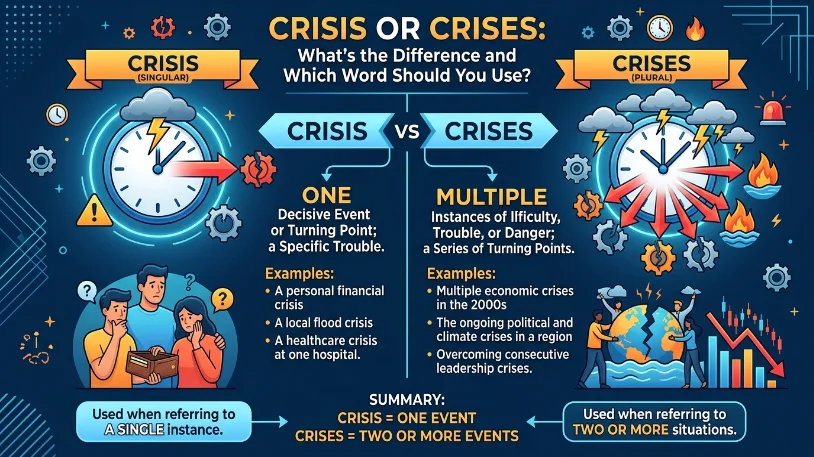
The good news is that the rule is easy once you understand it. “Crisis” refers to one difficult situation, while “crises” refers to more than one difficult situation. This guide explains the difference clearly with examples, grammar tips, comparison tables, FAQs, and practical writing advice to help you use both words correctly and confidently.
Crises or Crisis – Quick Answer
The difference is simple:
- Crisis = singular (one problem or emergency)
- Crises = plural (more than one problem or emergency)
Examples
- The company faced a financial crisis.
- Several economic crises affected the country.
Easy Rule
| Word | Meaning |
|---|---|
| Crisis | One difficult situation |
| Crises | Multiple difficult situations |
The Origin of Crises or Crisis
The word “crisis” comes from the Greek word krisis, meaning “decision” or “turning point.” Later, it entered Latin and then English.
The plural form “crises” follows an old Greek grammar pattern. That is why it does not simply become “crisises.”
English has several similar words:
| Singular | Plural |
|---|---|
| Crisis | Crises |
| Analysis | Analyses |
| Thesis | Theses |
| Diagnosis | Diagnoses |
These words follow the same language pattern from Greek origins.
The spelling difference exists because English borrowed these words from older languages instead of creating regular English plurals.
British English vs American English Spelling
Unlike many English words, “crisis” and “crises” are spelled the same in both British and American English.
There is no spelling difference between UK and US English for these words.
Examples in British English
- The nation faced an energy crisis.
- Political crises affected Europe.
Examples in American English
- The city experienced a housing crisis.
- Financial crises damaged markets worldwide.
Comparison Table
| Feature | British English | American English |
|---|---|---|
| Singular Form | Crisis | Crisis |
| Plural Form | Crises | Crises |
| Pronunciation | Similar | Similar |
| Meaning | Same | Same |
| Grammar Rules | Same | Same |
This makes the word easier than many other British vs American spelling differences.
Which Spelling Should You Use?
Your choice depends on whether you are talking about one situation or many situations.
Use “Crisis” When Talking About One Problem
Examples:
- A health crisis
- A banking crisis
- A personal crisis
Use “Crises” When Talking About Multiple Problems
Examples:
- Economic crises
- Political crises
- Global crises
For US, UK, and Global Audiences
The same grammar rule works everywhere:
- One = crisis
- More than one = crises
You do not need to change spelling for different countries.
Common Mistakes with Crises or Crisis
Many writers make grammar mistakes with these words.
Mistake 1: Using “Crisis” as a Plural
❌ Many crisis affected the country.
✔ Many crises affected the country.
Mistake 2: Writing “Crisises”
❌ Several crisises happened last year.
✔ Several crises happened last year.
“Crisises” is incorrect English.
Mistake 3: Wrong Verb Agreement
❌ The crises was serious.
✔ The crises were serious.
Plural nouns need plural verbs.
Mistake 4: Confusing Pronunciation
Some people pronounce “crises” like “crisis.”
Correct pronunciation:
- Crisis = cry-sis
- Crises = cry-seez
Crises or Crisis in Everyday Examples
These words appear in many forms of communication.
In Emails
- The company is handling a customer service crisis.
- Recent supply chain crises delayed production.
In News Articles
- The country entered an economic crisis.
- Climate crises are affecting many regions.
In Social Media
- Mental health crisis awareness is growing.
- Global crises often trend online quickly.
In Business Writing
- The manager solved the financial crisis.
- Multiple crises impacted international markets.
In Academic Writing
- Researchers studied political crises in history.
- The paper explains the healthcare crisis.
Crises or Crisis – Google Trends & Usage Data
Search interest for “crises or crisis” stays high because many learners struggle with irregular plural words.
Usage Trends
- “Crisis” is searched more often because singular forms appear more frequently in writing.
- “Crises” becomes common in news and global events discussions.
Popular Contexts
People often search these words during:
- Economic problems
- Political events
- Health emergencies
- Climate discussions
- Business failures
Country Usage
| Country | Common Usage |
|---|---|
| United States | Crisis & Crises |
| United Kingdom | Crisis & Crises |
| Canada | Crisis & Crises |
| Australia | Crisis & Crises |
| India | Crisis & Crises |
The grammar rules stay the same worldwide.
Comparison Table: Crises vs Crisis
| Feature | Crisis | Crises |
|---|---|---|
| Number | Singular | Plural |
| Meaning | One problem | Multiple problems |
| Correct English | Yes | Yes |
| Common Use | Very common | Common |
| Pronunciation | Cry-sis | Cry-seez |
| Example | Financial crisis | Financial crises |
FAQs About Crises or Crisis
Is “crisis” singular or plural?
“Crisis” is singular.
What is the plural of crisis?
The plural of “crisis” is “crises.”
Is “crisises” a real word?
No. “Crisises” is incorrect.
Why does crisis become crises?
The word follows an old Greek plural grammar pattern.
Can I use crisis for multiple problems?
No. Use “crises” for more than one problem.
Are crisis and crises pronounced differently?
Yes.
- Crisis = cry-sis
- Crises = cry-seez
Do British and American English spell them differently?
No. Both use the same spellings.
Conclusion
Understanding the difference between “crises or crisis” is easier once you remember one simple rule: “crisis” means one difficult situation, while “crises” means multiple difficult situations. The words may look similar, but they serve different grammar purposes.
Many English learners become confused because the plural form is irregular. Instead of adding “-s” or “-es,” the word changes from “crisis” to “crises.” This pattern comes from ancient Greek language rules that still influence modern English today.
The good news is that British English and American English use the same spellings, so you do not need to worry about regional differences. You only need to choose the correct form based on whether the noun is singular or plural.
Using the right version improves your grammar, writing quality, and professional communication. Whether you are writing emails, essays, business reports, social media posts, or news articles, understanding this difference helps your writing look more polished and accurate.