If you’ve recently been tested for a sexually transmitted infection (STI) or noticed unusual symptoms, you may wonder whether you have HPV or herpes. Many people confuse these two infections because both can spread through skin-to-skin sexual contact. However, HPV (Human Papillomavirus) and herpes are caused by different viruses, have different symptoms, and require different approaches to prevention and treatment.
People search for “HPV or herpes” because they want to understand the differences, learn about symptoms, know how each infection spreads, and find out whether they need testing or medical care. Understanding these differences can help reduce confusion and support informed conversations with healthcare professionals.
This guide explains what HPV and herpes are, how they differ, their symptoms, diagnosis, treatment options, prevention methods, and answers to common questions. While this article provides educational information, it is not a substitute for medical advice. If you think you may have an STI, consult a qualified healthcare provider for diagnosis and treatment.
HPV or Herpes – Quick Answer
Although HPV and herpes are both common viral infections that can spread through sexual contact, they are not the same disease.
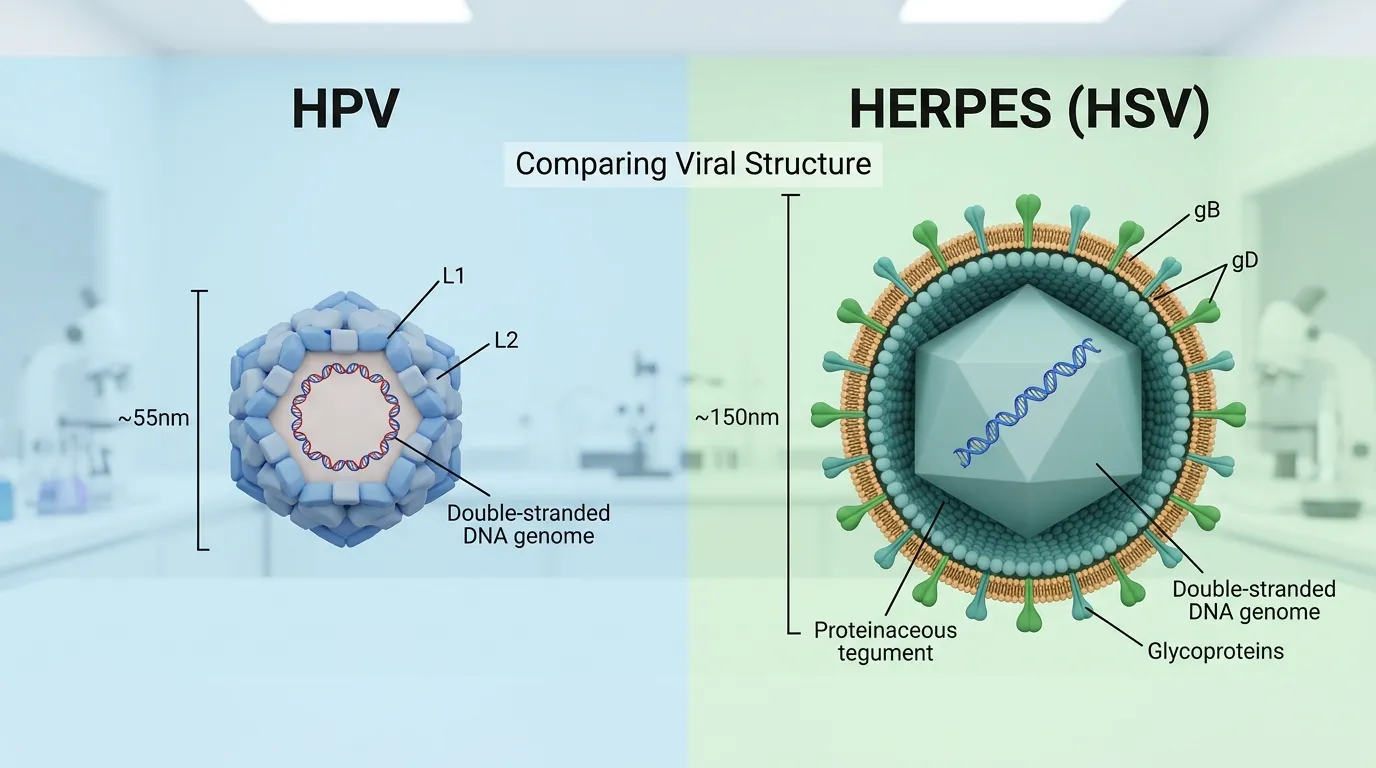
HPV (Human Papillomavirus)
- Caused by the human papillomavirus.
- Some types cause genital warts.
- Other types can increase the risk of certain cancers.
- Many HPV infections cause no symptoms and clear on their own.
Herpes
- Caused by the herpes simplex virus (HSV-1 or HSV-2).
- Often causes painful blisters or sores.
- The virus remains in the body and can reactivate over time.
Quick Comparison
| Feature | HPV | Herpes |
|---|---|---|
| Virus | Human Papillomavirus | Herpes Simplex Virus |
| Common Symptom | Genital warts or no symptoms | Painful blisters or sores |
| Can Cause Cancer | Some types | No |
| Vaccine Available | Yes | No approved vaccine |
| Curable | No, but many infections clear naturally | No |
What Is HPV?
HPV stands for Human Papillomavirus.
It is one of the most common sexually transmitted infections worldwide. There are more than 100 types of HPV, and around 40 can affect the genital area.
Most people with HPV never develop symptoms. In many cases, the immune system clears the infection naturally.
Some HPV types cause:
- Genital warts
- Cervical cancer
- Anal cancer
- Penile cancer
- Certain throat cancers
What Is Herpes?
Herpes is caused by the Herpes Simplex Virus (HSV).
There are two main types:
- HSV-1, commonly associated with oral herpes but can also cause genital herpes.
- HSV-2, which more commonly causes genital herpes.
Herpes often causes painful blisters or sores around the mouth or genital area. After infection, the virus remains in the body and may become active again later.
HPV vs Herpes: Key Differences
| Feature | HPV | Herpes |
|---|---|---|
| Virus Type | Human Papillomavirus | Herpes Simplex Virus |
| Main Symptoms | Warts or no symptoms | Blisters and sores |
| Pain | Usually painless | Often painful |
| Long-Term Infection | Many infections clear naturally | Virus stays in the body |
| Cancer Risk | Some types increase cancer risk | Not linked to cancer |
| Vaccine | Yes | No |
| Antiviral Medicines | Not for HPV itself | Yes, to reduce outbreaks |
Symptoms of HPV vs Herpes
HPV Symptoms
Many people have no symptoms.
Possible signs include:
- Genital warts
- Flat or raised skin growths
- Abnormal cervical screening results
- Rarely, symptoms related to HPV-associated cancers
Herpes Symptoms
Symptoms may include:
- Painful blisters
- Open sores
- Itching or burning
- Pain during urination
- Flu-like symptoms during the first outbreak
Some people also have no noticeable symptoms.
Causes and How They Spread
Both infections spread mainly through intimate skin-to-skin contact.
HPV Transmission
- Vaginal sex
- Anal sex
- Oral sex
- Genital skin contact
Herpes Transmission
- Oral contact
- Kissing (HSV-1)
- Vaginal sex
- Anal sex
- Oral sex
- Skin contact during an outbreak, and sometimes when no sores are visible
Using condoms lowers the risk but does not completely eliminate it because the viruses can affect areas not covered by a condom.
Diagnosis
HPV Diagnosis
Healthcare providers may use:
- Cervical screening (Pap test)
- HPV DNA testing
- Physical examination of genital warts
There is no routine HPV screening test for everyone.
Herpes Diagnosis
Diagnosis may involve:
- Physical examination
- Swab of a sore
- Blood tests in some situations
Testing is most accurate when sores are present.
Treatment Options
HPV Treatment
There is no treatment that removes HPV itself.
Treatment focuses on:
- Removing genital warts
- Monitoring abnormal cervical cells
- Treating HPV-related cancers if they develop
Many HPV infections clear naturally without treatment.
Herpes Treatment
There is no cure for herpes.
However, antiviral medicines can:
- Shorten outbreaks
- Reduce symptoms
- Lower the risk of transmission
- Reduce the frequency of recurrent outbreaks
Prevention
Several steps can reduce the risk of HPV and herpes.
HPV Prevention
- Get the HPV vaccine if eligible.
- Attend recommended cervical screening appointments.
- Use condoms and dental dams.
- Limit the number of sexual partners.
Herpes Prevention
- Avoid sexual contact during active outbreaks.
- Use condoms consistently.
- Talk openly with sexual partners about STI status.
- Take prescribed antiviral medication if recommended.
Can You Have Both HPV and Herpes?
Yes.
A person can have both HPV and herpes because they are caused by different viruses.
Having one infection does not prevent someone from getting the other.
If you think you may have either infection, seek medical advice for proper testing and guidance.
Common Myths About HPV and Herpes
Myth 1
Only people with symptoms have these infections.
Fact: Many people have no symptoms.
Myth 2
HPV and herpes are the same disease.
Fact: They are different viruses with different health effects.
Myth 3
Only women get HPV.
Fact: HPV affects people of all genders.
Myth 4
Herpes is always obvious.
Fact: Many people have mild symptoms or none at all.
HPV or Herpes in Everyday Situations
Medical Appointments
A healthcare provider may recommend HPV screening after an abnormal cervical screening result or evaluate symptoms suggestive of herpes.
Health Education
Schools and public health programs often teach the differences between HPV and herpes to improve awareness.
Social Media
Health professionals frequently answer questions about HPV vaccination, herpes symptoms, and STI prevention.
Everyday Conversations
People often ask whether genital warts mean herpes. In fact, genital warts are usually caused by certain types of HPV, not herpes.
HPV or Herpes – Google Trends & Public Awareness
Searches for “HPV or herpes” remain common because many people want reliable health information after noticing symptoms, receiving test results, or learning about STI prevention.
Interest often increases during:
- STI awareness campaigns
- HPV vaccination programs
- Sexual health education
- Public health initiatives
People searching this topic usually want to understand symptoms, differences, testing, and treatment options.
Frequently Asked Questions
1. Is HPV the same as herpes?
No. They are different viral infections caused by different viruses.
2. Which is more common, HPV or herpes?
Both are common, but HPV is one of the most common sexually transmitted infections worldwide.
3. Can HPV turn into herpes?
No. HPV cannot become herpes, and herpes cannot become HPV.
4. Is there a vaccine for HPV?
Yes. Vaccination can protect against several HPV types associated with genital warts and certain cancers.
5. Can herpes be cured?
No. There is currently no cure, but antiviral medicines can help manage symptoms and reduce outbreaks.
6. Can someone have HPV without knowing it?
Yes. Many HPV infections cause no symptoms.
7. Should I see a doctor if I think I have HPV or herpes?
Yes. A healthcare professional can evaluate your symptoms, recommend appropriate testing if needed, and discuss treatment or prevention options.
Conclusion
Understanding the difference between HPV or herpes is important for protecting your health and making informed decisions. Although both infections can spread through sexual contact, they are caused by different viruses and have different symptoms, risks, and treatments. HPV often causes no symptoms and many infections clear naturally, but some types can increase the risk of certain cancers. Herpes commonly causes recurring blisters or sores and remains in the body after infection, though antiviral medicines can help manage it. Knowing the differences can reduce confusion and encourage timely medical care. If you have symptoms, concerns, or questions about STI testing or vaccination, speak with a qualified healthcare provider. Early information and appropriate care are key to maintaining your sexual health and overall well-being.