“Possible” is a word most of us use without thinking: a possible solution, a possible delay, it is possible that it rains. It means something can happen or be done — but because it is so common, it can make writing sound plain. Stronger alternatives add confidence and precision.
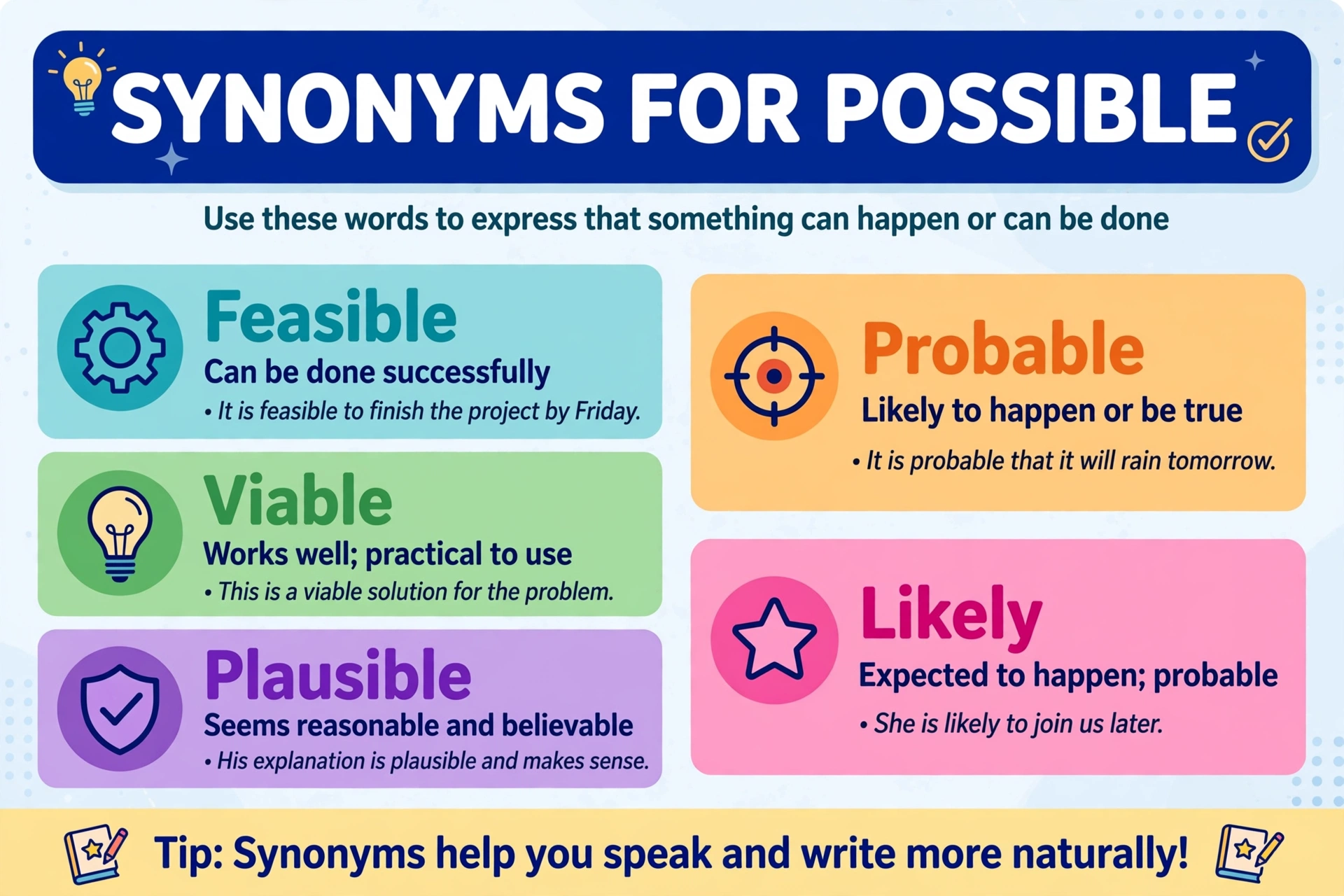
Each synonym below answers a slightly different question. “Feasible” asks whether something can realistically be done, “likely” asks whether it will probably happen, and “viable” asks whether it can keep working over time. Learning these five words will make your essays, emails, and reports sound more professional.
In school essays, “possible” appears in almost every other paragraph: “It is possible that…,” “a possible reason is…” Teachers notice the repetition. Swapping in “feasible” or “likely” shows control over your language. In job applications and reports, the upgrade matters even more — “a viable strategy” inspires confidence in a way “a possible strategy” never will.
There is also a confidence problem with “possible.” Saying “it is possible we finish on time” sounds hesitant, almost like you doubt it yourself. Saying “finishing on time is achievable” or “a win looks likely” sounds like someone who has thought it through. In exams, interviews, and presentations, that difference in tone can change how people judge your ideas — strong words make strong impressions.
Feasible
Meaning: Able to be done successfully in a realistic way, given the time and resources available.
Example: The engineer confirmed that building the bridge in eight months is feasible.
Another example: With two more volunteers, finishing the project this week is feasible.
Achievable
Meaning: Able to be reached or gained through effort and hard work.
Example: With daily practice, a high score on the test is absolutely achievable.
Another example: Saving a small amount each month makes the holiday trip achievable.
Likely
Meaning: Having a good chance of happening; probable.
Example: Dark clouds are gathering, so rain this evening seems likely.
Another example: The team played brilliantly, so a win on Saturday looks likely.
Viable
Meaning: Able to work well and continue successfully over a long period.
Example: The small startup finally found a viable way to earn money from its app.
Another example: The village found a viable way to power homes with solar panels.
Practical
Meaning: Sensible, useful, and easy to put into action in real life.
Example: Bringing a water bottle is a practical solution for staying hydrated on hikes.
Another example: Wearing layers is the most practical advice for very cold weather.
How to Use These Words
Match the word to your exact meaning. Use “feasible” and “practical” when discussing plans and whether they can actually work. Use “achievable” for goals that need effort. Use “likely” when you are talking about probability rather than ability — “a likely outcome” is not the same as “a feasible plan.” And use “viable” when something must survive long-term, like a business idea.
Watch out for one common mix-up: “possible” can describe both ability and chance, but its synonyms usually pick one side. “Feasible,” “achievable,” and “viable” are about ability — can it be done? “Likely” and “probable” are about chance — will it happen? Keeping those two groups separate will prevent most mistakes. Precision like this matters everywhere in English; even a single letter can change a word’s job, as chose vs choose and practice vs practise demonstrate.
Think of the scale from weak to strong. “Possible” only says the door is open. “Feasible” says you have checked the resources and the door actually leads somewhere. “Viable” goes further and says the path will still be there next year. When you write a report or an essay, climbing that scale — from possible to feasible to viable — shows the reader you have moved from guessing to judging. That is exactly the kind of thinking good grades are made of.
Common Mistakes to Avoid
- Using “likely” for ability. “Likely” is about chance, not ability. “A likely plan” is wrong — a plan is not probable, it is workable. Say “a feasible plan” instead.
- Calling impossible dreams “feasible.” “Feasible” demands realistic resources. Traveling to Mars next month is not feasible, no matter how much you want it.
- Using “practical” for outcomes. “Practical” fits plans and solutions, not results. “A practical outcome” sounds strange when you mean “a likely outcome.”
- Treating “viable” as a simple swap for “possible.” “Viable” adds the idea of long-term survival. A “viable business” must keep working for years — “possible” carries no such promise.
Quick Practice
Choose the best word for each sentence: feasible, achievable, likely, viable, practical.
- A ___ plan needs real numbers and real people, not just wishes.
- Heavy traffic on the bridge makes delays ___ this morning.
- The company needs a ___ model that can survive at least five years.
Answer key: 1. feasible — 2. likely — 3. viable
Related Words Worth Learning
FAQs
What is the difference between “possible” and “feasible”?
“Possible” means something could happen in theory. “Feasible” means it can realistically be done with the resources at hand. Flying to the moon is possible; doing it this weekend on your budget is not feasible.
Is “likely” a true synonym for “possible”?
Partly. “Likely” adds the idea of probability — something has a good chance of happening. “Possible” only says it could happen, even if the chance is tiny.
Which synonym is best for formal writing?
“Feasible” and “viable” are excellent in business and academic writing. “Achievable” works well for goals and plans. “Doable” exists too, but it sounds casual.
Can “practical” replace “possible” in any sentence?
No. “Practical” means sensible and workable, so it only fits when “possible” refers to a plan or solution. You would not say “a practical outcome” when you mean “a likely outcome.”
What is the difference between “feasible” and “viable”?
“Feasible” asks: can it be done with the time, money, and people available? “Viable” asks a harder question: can it keep working successfully over a long period? A pop-up shop can be feasible for one month but not viable for five years. Use “feasible” for short-term plans and “viable” when survival matters.
Is “doable” a real word?
Yes, and everyone understands it — but it is informal. “That’s doable” is fine in conversation with friends or colleagues. In essays, reports, and formal emails, use “feasible” or “achievable” instead for a more professional tone.
Conclusion
“Possible” opens the door, but these five synonyms walk you through it with style. “Feasible” and “practical” judge whether a plan can work, “achievable” celebrates effort, “likely” weighs probability, and “viable” thinks long-term. Choose the one that matches your exact meaning, and your writing will sound clearer, stronger, and more confident.
Practice with a quick exercise: rewrite three old sentences of yours that use “possible,” replacing each with the sharpest synonym from this guide. It takes five minutes and trains your brain to reach for the precise word automatically.

Thomas Allen is a language writer and editor who loves exploring the subtle differences between words. He creates clear, practical guides that help readers understand English better — one word pair at a time.