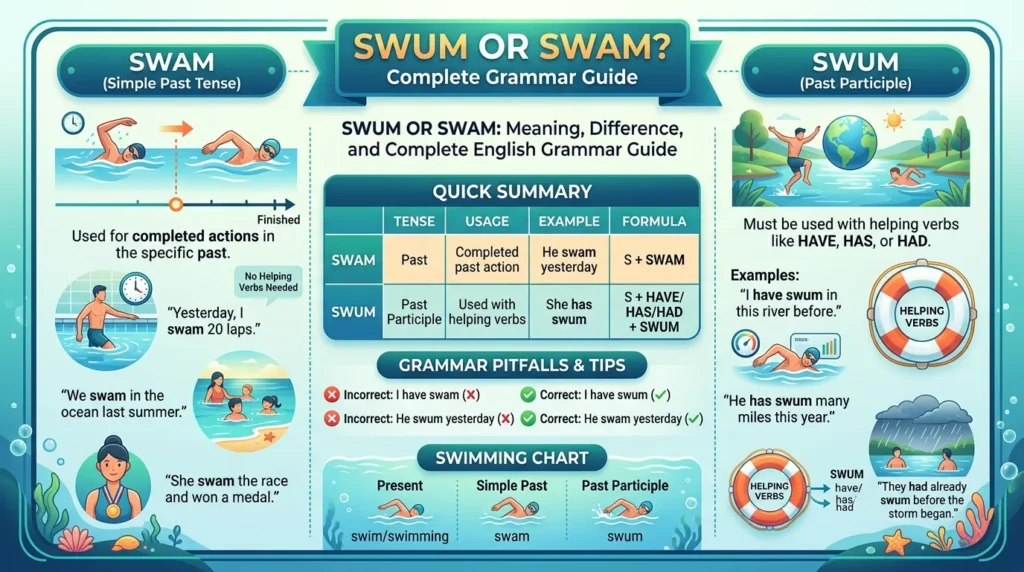
The keyword “swum or swam” is one of the most common grammar questions in English. Many learners get confused about which form is correct when talking about swimming in the past. This confusion usually appears in exams, writing tasks, and daily conversation because both words look similar but are used in different grammatical situations.
The verb “swim” has three forms: swim (base form), swam (past tense), and swum (past participle). People often mix up “swam” and “swum,” especially when forming sentences like “I have swam” or “I have swum.” This leads to incorrect usage in writing and speaking.
For example:
- “I swam in the pool yesterday.” ✔
- “I have swum in that lake before.” ✔
- “I have swam in that lake before.” ❌
Understanding this difference is important for students, English learners, and professionals who want correct grammar in communication. Even native speakers sometimes make mistakes with irregular verbs like this.
In this article, you will clearly understand the difference between swum and swam, their origin, correct usage rules, common mistakes, real-life examples, and simple memory tips. By the end, you will confidently use both forms without confusion.
“Swum or Swam” – Quick Answer
👉 Swam = Simple past tense
👉 Swum = Past participle (used with has/have/had)
Examples:
- I swam in the ocean yesterday. ✔
- She swam fast in the race. ✔
- I have swum across this river before. ✔
👉 Simple rule:
Swam = finished action (past)
Swum = perfect tense (with helping verbs)
The Origin of “Swum or Swam”
The verb “swim” comes from Old English “swimman,” meaning to move through water.
Over time, it became an irregular verb, meaning it does not follow normal grammar patterns:
- Base form: swim
- Past tense: swam
- Past participle: swum
Why irregular?
Because English evolved from multiple languages (Old English, Germanic influences), many common verbs kept irregular forms instead of becoming regular “-ed” verbs.
British English vs American English Spelling
There is no difference between British and American English for “swam” or “swum.” Both use the same grammar rules.
| Form | British English | American English |
| Base form | swim | swim |
| Past tense | swam | swam |
| Past participle | swum | swum |
| Usage rule | identical | identical |
👉 Conclusion: Grammar is universal here.
Which Spelling Should You Use?
Use depends on sentence structure, not region:
- ✅ Use “swam” when:
- Talking about a completed action
- Using simple past tense
- Example: I swam yesterday
- ✅ Use “swum” when:
- Using “have/has/had”
- Perfect tenses
- Example: I have swum before
👉 Global rule:
Swam = past action | Swum = perfect tense
Common Mistakes with “Swum or Swam”
❌ Wrong: I have swam in the sea
✔ Correct: I have swum in the sea
❌ Wrong: She swum yesterday
✔ Correct: She swam yesterday
❌ Wrong: They have swam before
✔ Correct: They have swum before
👉 Key mistake:
People incorrectly use “swum” in simple past sentences.
“Swum or Swam” in Everyday Examples
📧 Emails:
- I swam in the hotel pool during my trip.
- I have swum in this competition before.
📰 News:
- The athlete swam across the channel.
- She has swum in international events.
📱 Social Media:
- I swam 2 km today 🏊♂️
- I have swum in the ocean 🌊
📄 Formal Writing:
- The swimmer swam faster than expected.
- He has swum in many championships.
“Swum or Swam” – Google Trends & Usage Data
Search trends show:
- High confusion among ESL learners
- Common in school grammar questions
- Frequently searched during exams and tests
Top regions:
- India
- Pakistan
- UK
- USA
- Middle East
👉 Why people search it:
- Irregular verb confusion
- Exam preparation
- English learning apps
- Writing corrections
Comparison Table: Swum vs Swam
| Word | Type | Usage | Example |
| Swam | Past tense | Simple past action | I swam yesterday |
| Swum | Past participle | With have/has/had | I have swum before |
FAQs
1. What is correct: swum or swam?
Both are correct but used in different situations.
2. When do I use “swam”?
Use it for simple past actions.
3. When do I use “swum”?
Use it with have, has, or had.
4. Can I say “I have swam”?
No, the correct form is I have swum.
5. Is “swum” past tense?
No, it is the past participle.
6. Is there British or American difference?
No, both use the same forms.
7. What is the base verb?
The base verb is swim.
Conclusion
The difference between “swum or swam” is a simple but important part of English grammar. Both words come from the verb “swim,” but they are used in different grammatical structures. “Swam” is the simple past tense used for completed actions in the past, while “swum” is the past participle used with helping verbs like have, has, or had.
Many learners get confused because English irregular verbs do not follow normal “-ed” patterns. This leads to common mistakes like saying “I have swam” instead of the correct form “I have swum.” However, once you understand the rule, it becomes very easy to use both forms correctly.
There is no difference between British and American English in this case, so the grammar rules are universal. The key is to focus on sentence structure rather than spelling differences.
By remembering the simple rule — swam for past actions and swum for perfect tense — you can avoid mistakes and improve your English accuracy. This knowledge is useful for exams, writing, and everyday communication, helping you sound more natural and confident in English.