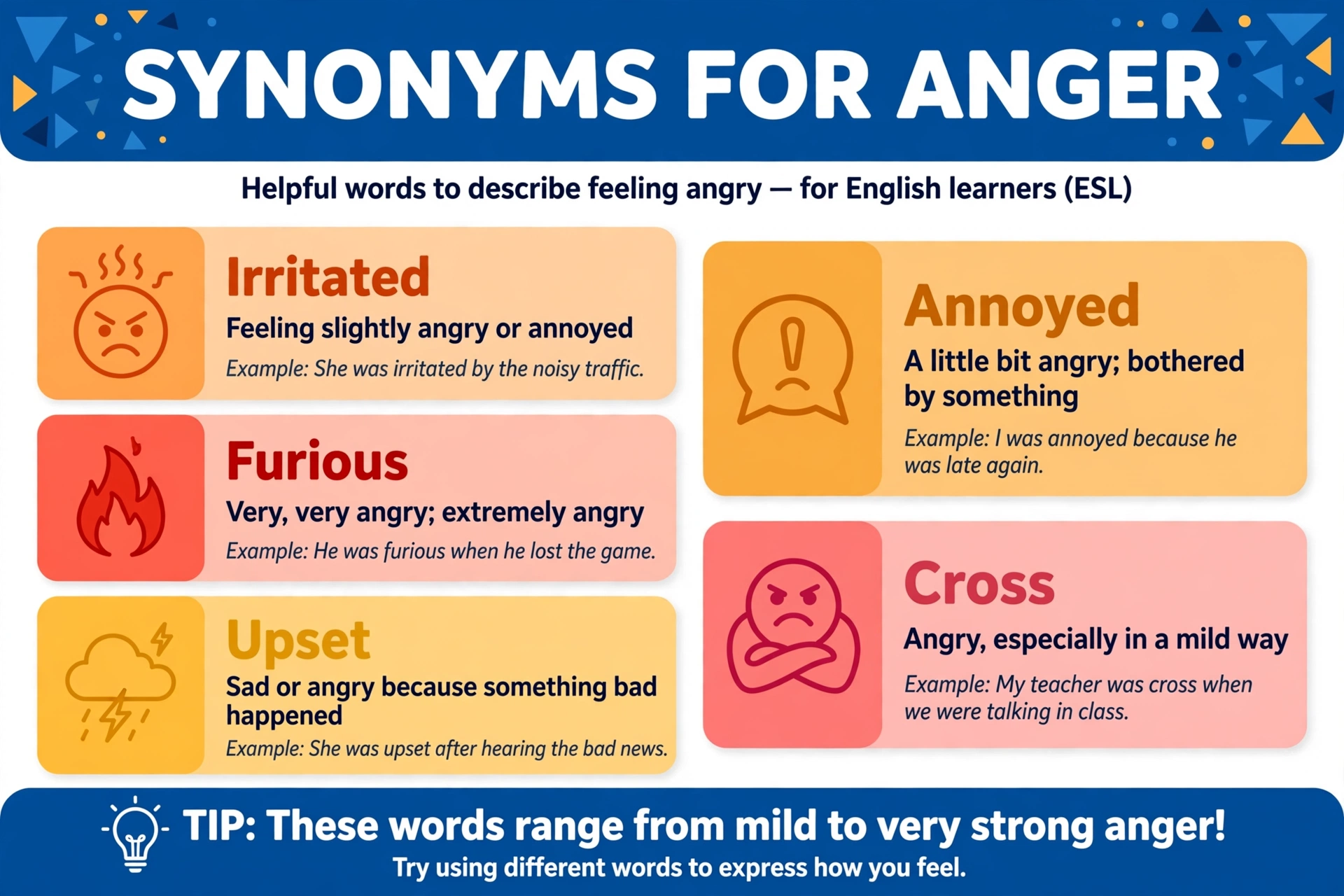
Anger is a strong feeling of displeasure — but not all anger is the same. A flash of irritation at a delayed train is not the same as the deep resentment built over years of unfair treatment. English offers a rich scale of words for this emotion, from mild annoyance to explosive rage, and writers who know the scale can describe feelings with honesty instead of exaggeration.
The five words below are arranged from hot to cool, so you can match the word to the temperature of the feeling. Getting this right matters in stories, essays, and even workplace emails, where “rage” and “irritation” send very different signals.
Psychologists say anger itself is not the enemy — it signals that something matters to us. The danger lies in expressing it badly: underplaying real fury as “irritation” lets problems fester, while exploding over small annoyances as “rage” burns relationships. Writers face the same calibration challenge on the page. The five words below form a thermometer from cool to boiling, so you can report the emotional temperature honestly.
Strong feelings also affect groups, not just individuals — uncontrolled fury can sink team spirit, which is why leaders study the difference in moral vs morale.
Rage
Meaning: Extremely intense, often uncontrolled anger; the hottest word on the scale.
Example: He was shaking with rage after hearing the false accusation.
Example 2: Road rage turned a small traffic dispute into a dangerous fight.
Fury
Meaning: Wild, powerful anger, often sudden and overwhelming.
Example: The crowd reacted with fury when the referee’s decision was announced.
Example 2: She left the meeting in fury after the insult.
Irritation
Meaning: A mild, nagging feeling of annoyance; the coolest word here.
Example: She felt a small irritation at the constant buzzing of the lights.
Example 2: His constant tapping was a minor irritation during the exam.
Frustration
Meaning: Anger mixed with helplessness, caused by obstacles, delays, or repeated failure.
Example: His frustration grew as the software crashed for the third time.
Example 2: She sighed with frustration at the endless paperwork.
Resentment
Meaning: Long-lasting, bitter anger caused by a sense of unfair treatment.
Example: Years of being overlooked left her with a deep resentment toward the company.
Example 2: He could not hide his resentment at being passed over for promotion.
Anger at a Glance
A quick comparison to lock in the differences, from coolest to hottest:
| Word | Tone | Use it when… |
|---|---|---|
| Irritation | Mild | describing small, nagging annoyance |
| Frustration | Tense | obstacles or failure block what you want |
| Resentment | Bitter | anger has lasted and points at unfairness |
| Fury | Intense | the outburst is sudden and overwhelming |
| Rage | Extreme | describing near-total loss of control |
How to Use These Words
Calibrate by intensity and duration. Irritation is brief and minor — perfect for daily annoyances. Frustration adds the sting of being blocked. Rage and fury are explosive and short-lived; reserve them for genuinely extreme moments or your writing will sound melodramatic. Resentment is the slow burn — it lasts months or years and always points at unfairness. In narratives, moving a character from irritation to resentment shows emotional growth; jumping straight to rage skips it. And when describing everyday mix-ups rather than emotions, keep your pairs straight — like the easily confused words in trouper or trooper.
A practical trick: add the cause to test your choice. “Irritation at the noise,” “frustration with the delay,” “resentment toward the unfair decision,” “fury at the betrayal,” “rage over the false accusation.” If the cause sounds too small for the word — irritation over a betrayal, rage over a delayed bus — you have caught yourself exaggerating. Readers forgive strong feelings; they distrust inflated ones. Right-sizing the word is what makes emotional writing believable.
Also consider who feels it and how long it lasts. Irritation and frustration are usually brief and tied to a moment; resentment is a long-term resident that can poison years. Rage and fury erupt and fade fast — describing someone as “full of rage” for an entire novel strains belief unless the rage keeps reigniting. In dialogue, let word choice reveal character: a calm person admits “irritation,” a bitter one nurses “resentment,” and only a truly overwhelmed one confesses “rage.” Readers read the word and instantly read the person.
Common Mistakes to Avoid
- “Rage” for everyday annoyance. A late bus causes irritation, not rage. Inflating small feelings makes writing sound melodramatic and untrustworthy.
- “Resentment” without a target. Resentment always points at someone or something felt to be unfair — “resentment toward the decision.” Floating resentment with no cause confuses readers.
- “Frustration” for pure anger. Frustration includes helplessness. If nothing is blocking you and you are simply displeased, the honest word is “anger” or “irritation.”
- “Fury” in formal reports. “The client expressed fury” sounds like a tabloid headline. In professional writing, prefer “strong dissatisfaction” or “serious concern.”
Related Words Worth Learning
- Synonyms for Alone — the exposed feeling beneath anger
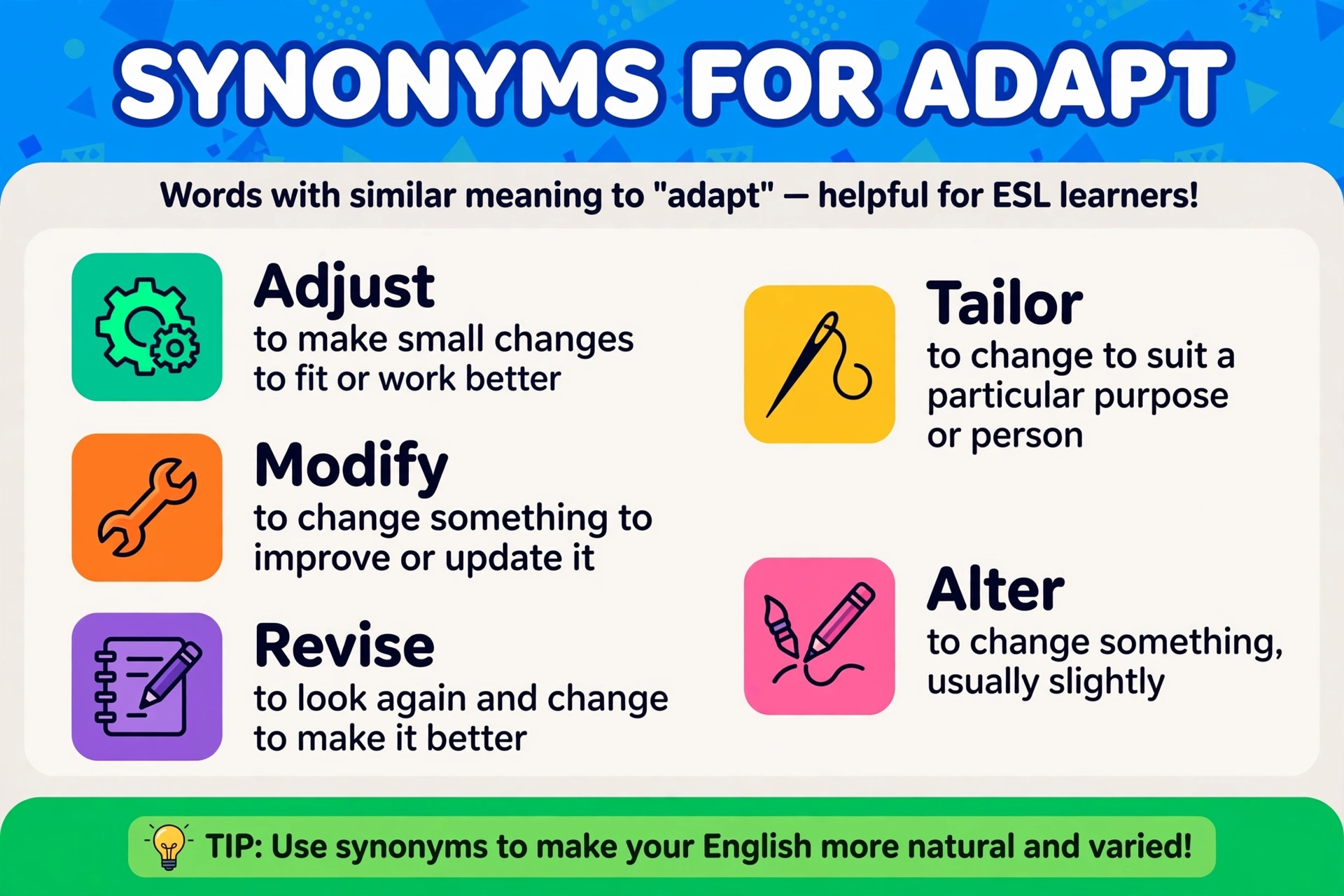
- Synonyms for Adapt — recovering after emotional storms
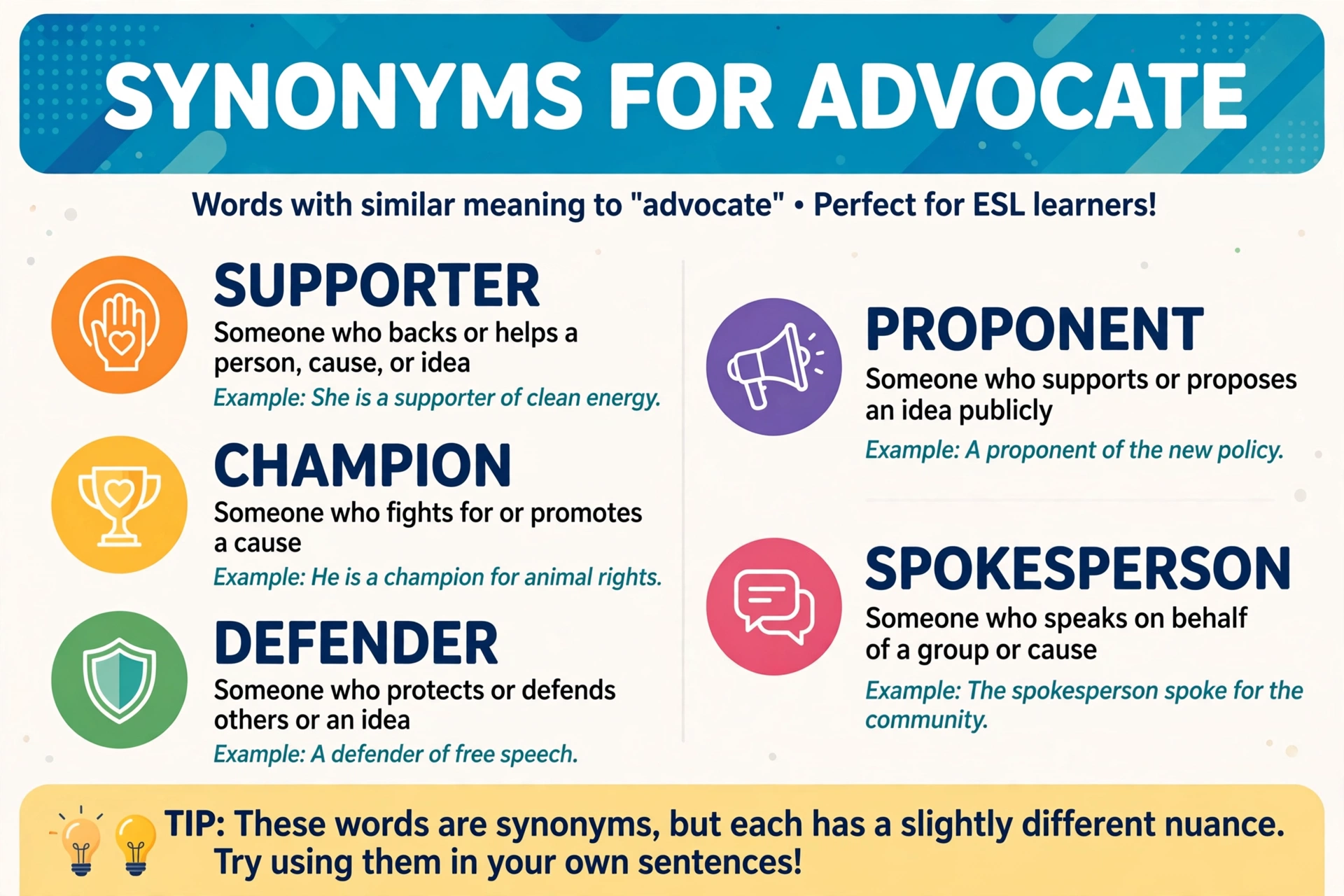
- Synonyms for Advocate — staying steady when provoked
Quick Practice
Choose the best word for each sentence:
- She felt growing ___ as the website crashed again. (frustration / rage)
- He was red with ___ after the false accusation. (rage / irritation)
- Years of unfair treatment left deep ___ in the team. (resentment / irritation)
- The buzzing fly was a small ___ during dinner. (irritation / fury)
Answer key: 1. frustration — 2. rage — 3. resentment — 4. irritation
FAQs
What is the strongest word for anger?
Rage is generally the strongest, suggesting loss of control. Fury is nearly as strong but can sound slightly more literary.
What is the difference between anger and frustration?
Anger is the broad emotion of displeasure. Frustration specifically includes helplessness — you are angry because something blocks you. All frustration contains anger, but not all anger is frustration.
Is “resentment” always negative?
Yes, it describes bitter, lingering anger about unfairness. Unlike “anger,” which can be righteous and brief, resentment implies something unhealthy that has been held too long.
What is a mild word for anger?
Irritation or annoyance. Both describe low-level displeasure without suggesting anything explosive.
What is the verb form of “anger”?
“Anger” is also a verb: “His rudeness angered the whole team.” The others give verbs too: frustration gives “frustrate,” irritation gives “irritate,” and resentment gives “resent.”
Is it okay to show anger in professional emails?
Briefly naming it is fine — “I am frustrated by the delay” — but “rage” and “fury” never belong in professional writing. Calm, specific language gets faster results than heated words.
Conclusion
Anger has a temperature, and now you can read the thermometer: irritation for the small stuff, frustration for the blocked, rage and fury for the explosive, and resentment for the long-buried. Choose the word that matches the heat, and your writing about emotions will feel true instead of theatrical.

Thomas Allen is a language writer and editor who loves exploring the subtle differences between words. He creates clear, practical guides that help readers understand English better — one word pair at a time.